
This post contains affiliate links, which means I may earn a commission if you purchase through those links (at no extra cost to you).
For the richest, most flavorful beef broth, start by roasting marrow bones, vegetables, and chunks of well-marbled beef before simmering everything low and slow. This classic technique creates a deep, savory broth with incredible body and color. You’ll end up with about 2 quarts of velvety beef broth plus tender cooked beef you can use in another recipe. Freeze it for soups, stews, sauces, and braises that truly taste homemade.
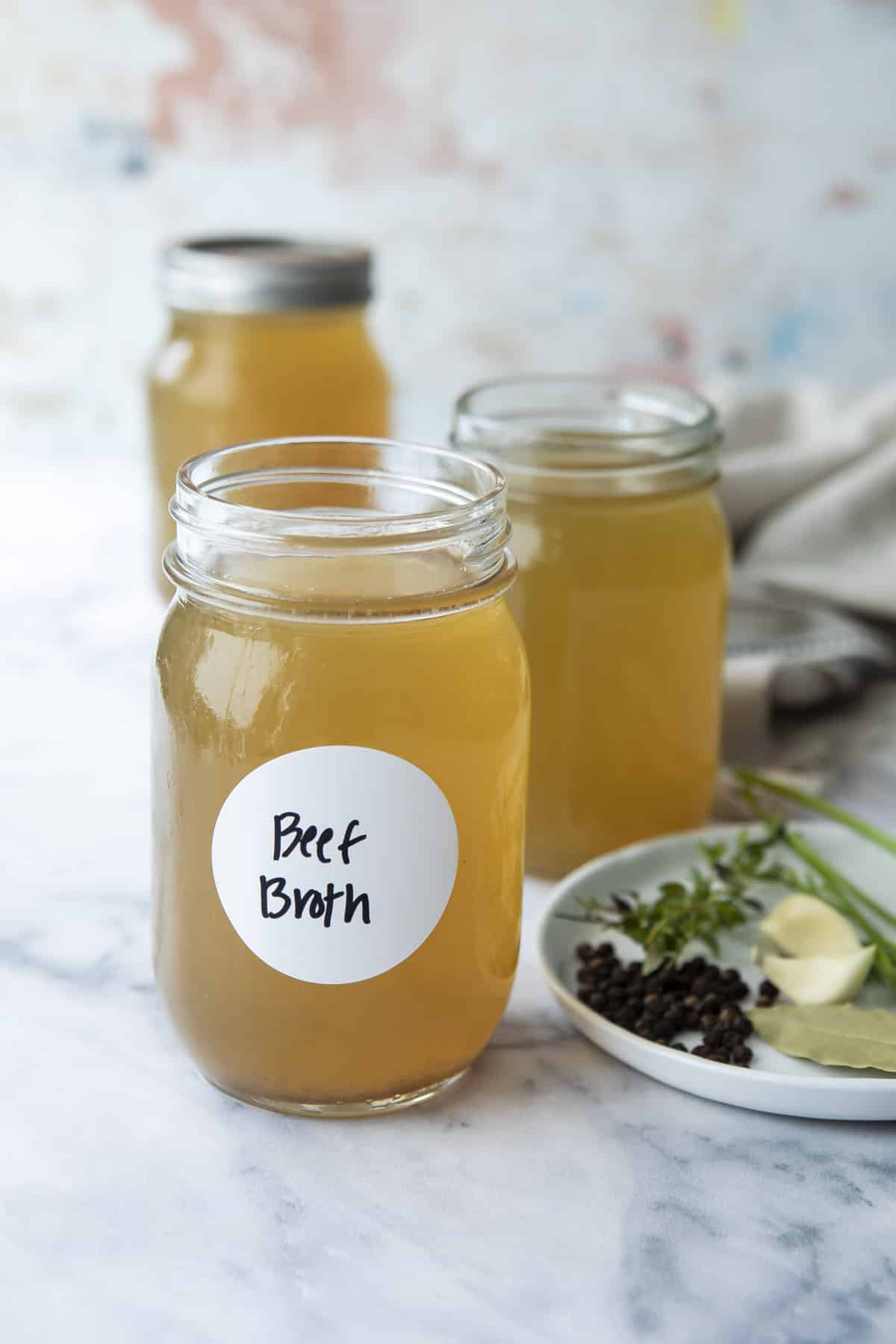
Meggan’s Notes
Homemade beef broth isn’t difficult, but it is technique-driven. Unlike chicken broth, where raw meat goes straight into the pot, beef broth depends on browning for depth and complexity.
Roasting the bones, vegetables, and beef first develops rich flavor, color, and natural gelatin that give beef broth its signature body. Marrow bones are especially important here. They release collagen as they simmer, which is what gives great broth that luxurious, slightly silky texture when cooled.
This recipe also follows a classic two-day method. After simmering, the broth is chilled overnight so the fat can rise and solidify. The next day, it’s easy to remove excess fat, leaving behind a clean, deeply beefy broth that’s flavorful without being greasy. If you like to cook with beef tallow, that’s a bonus byproduct.
The result is a foundational broth that elevates everything it touches, from soups and gravies to braised meats and pan sauces.
Why This Recipe Works
- Roasting first: Builds deep flavor and color you can’t get from raw bones alone.
- Marrow bones: Add gelatin for body and richness.
- Fresh vegetables: Provide clean, balanced flavor without bitterness.
- Cold water start: Keeps the broth clear, not cloudy.
- Overnight chilling: Makes it easy to remove excess fat for a cleaner broth.
Beef Broth Ingredients
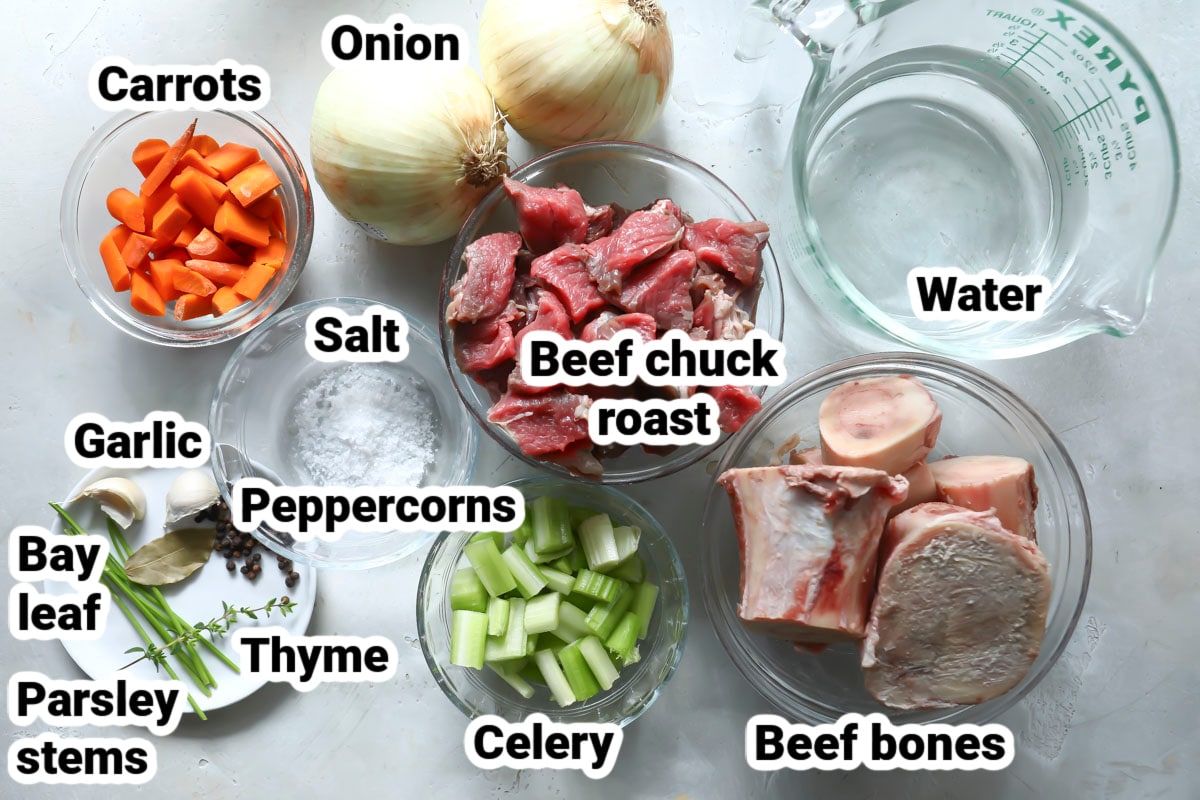
At a Glance: Here is a quick snapshot of what ingredients are in this recipe.
Please see the recipe card below for specific quantities.
- Beef bones: For the richest possible stock, use all beef marrow bones.
- Beef roast: This inexpensive cut comes from the shoulder and is marbled with fat. The long cooking time means that fat breaks down into meltingly tender chunks of beef and plenty of rich, full-bodied juices. Names can vary, so look for any of these labels: pot roast, blade roast, arm roast, or English roast.
- Onions, carrots, and celery: Some cooks save old vegetable trimmings to add to their broth. I prefer to start with new, fresh vegetables because I think the broth will taste better. So yes, we peel the carrots, and save your vegetable scraps for composting.
- Cold water: Always start with cold water. This helps keep the broth clear, not cloudy. The amount of water used and the length of simmering time will determine the intensity of the broth.
- Sachet d’epices: A bundle of parsley stems, fresh thyme, bay leaves, peppercorns, and garlic wrapped in cheesecloth and tied with kitchen twine.
- Cheesecloth: Cheesecloth comes in grades depending on how finely it’s woven (grade 10 is loosely-woven, grade 100 is finely-woven). Grade 90 cheesecloth is ideal for a sachet with enough strength and durability to be washed and reused, but not so tightly-woven that the spices cannot infuse liquids. My preferred cheesecloth is from Regency Wraps, a family-owned and operated company in Texas.
- Kitchen twine: Use kitchen twine for trussing turkeys and chickens, tying beef tenderloins, forming sausages, and stringing up fresh herbs to dry. Like the cheesecloth, my preferred kitchen twine is from Regency Wraps. They do a great job.
How to Make Beef Broth
- Preheat oven to 400 degrees. In the bottom of a roasting pan add bones, beef, onion, carrots, celery, and 1 cup water.
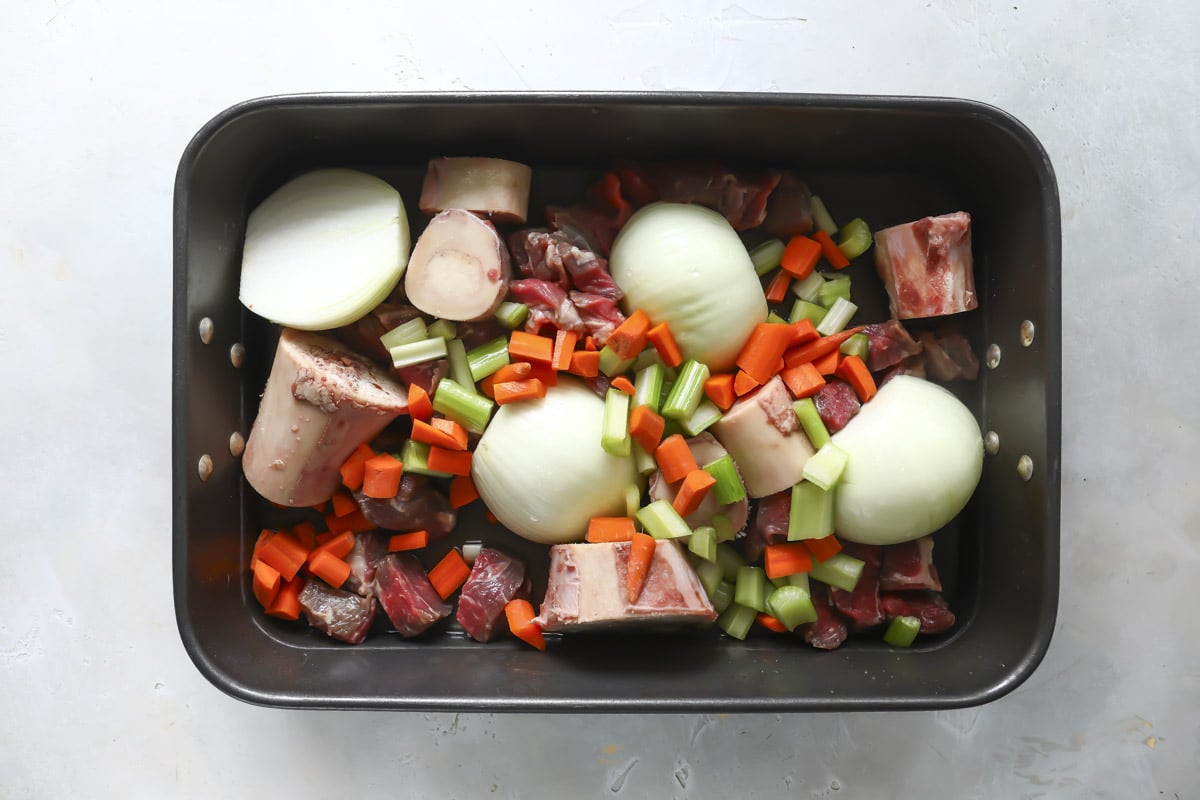
- Roast until well-browned, about 1 hour, adding water to the bottom of the pan if needed so nothing scorches.
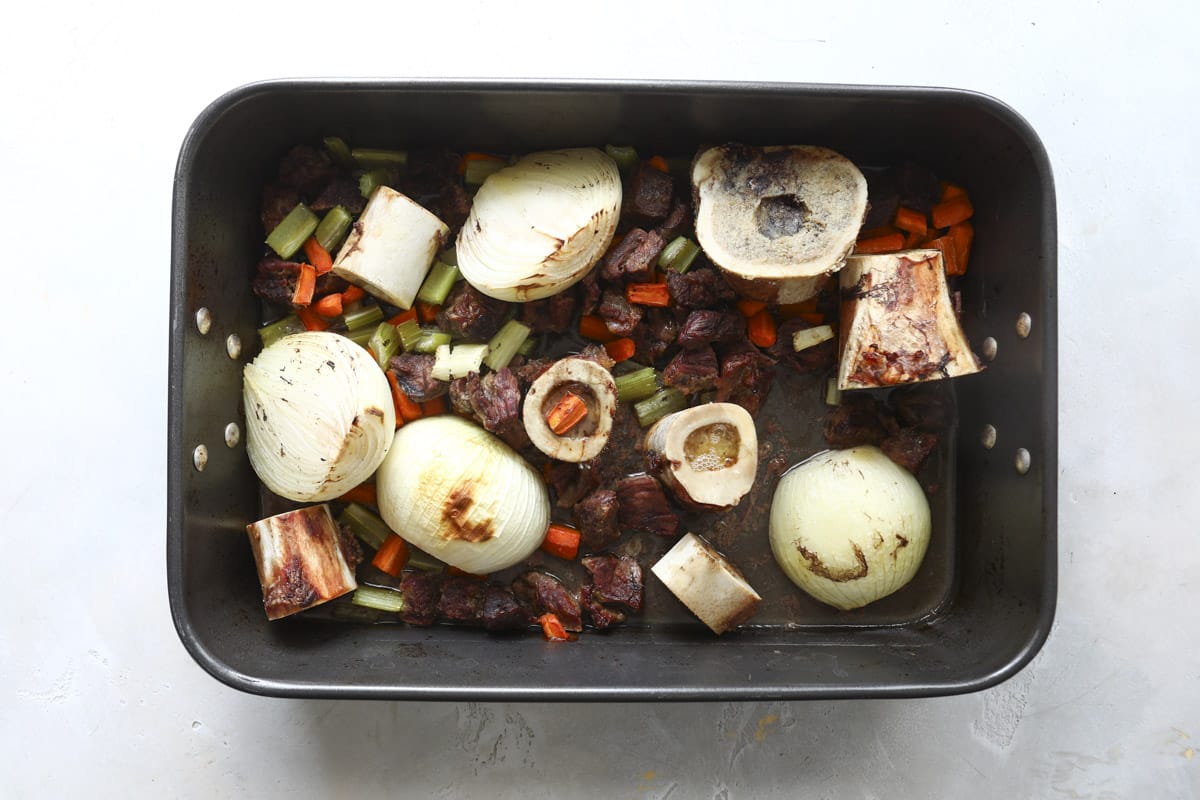
- To a Dutch oven or large stock pot, add roasted bones, beef, vegetables, enough cold water to cover (see note 3), and salt. If desired, tie parsley stems, thyme, garlic, bay leaf, and peppercorns to make a sachet or add loosely to the pot.
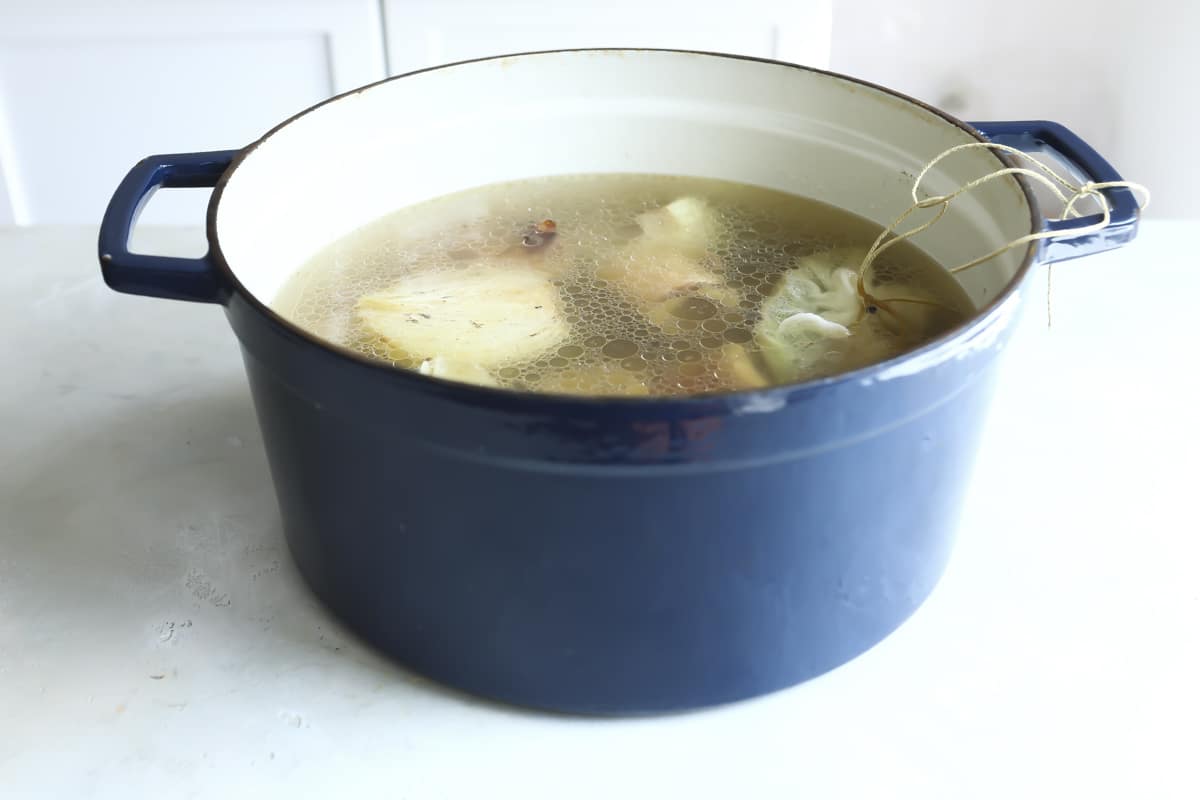
- Over medium-high heat, bring to a boil. Immediately reduce heat to low and skim the foam off the top. Simmer gently (bubbles should barely break the surface at irregular intervals) until the beef is cooked through, at least 2 hours. The longer the broth simmers, the more flavor it will have.
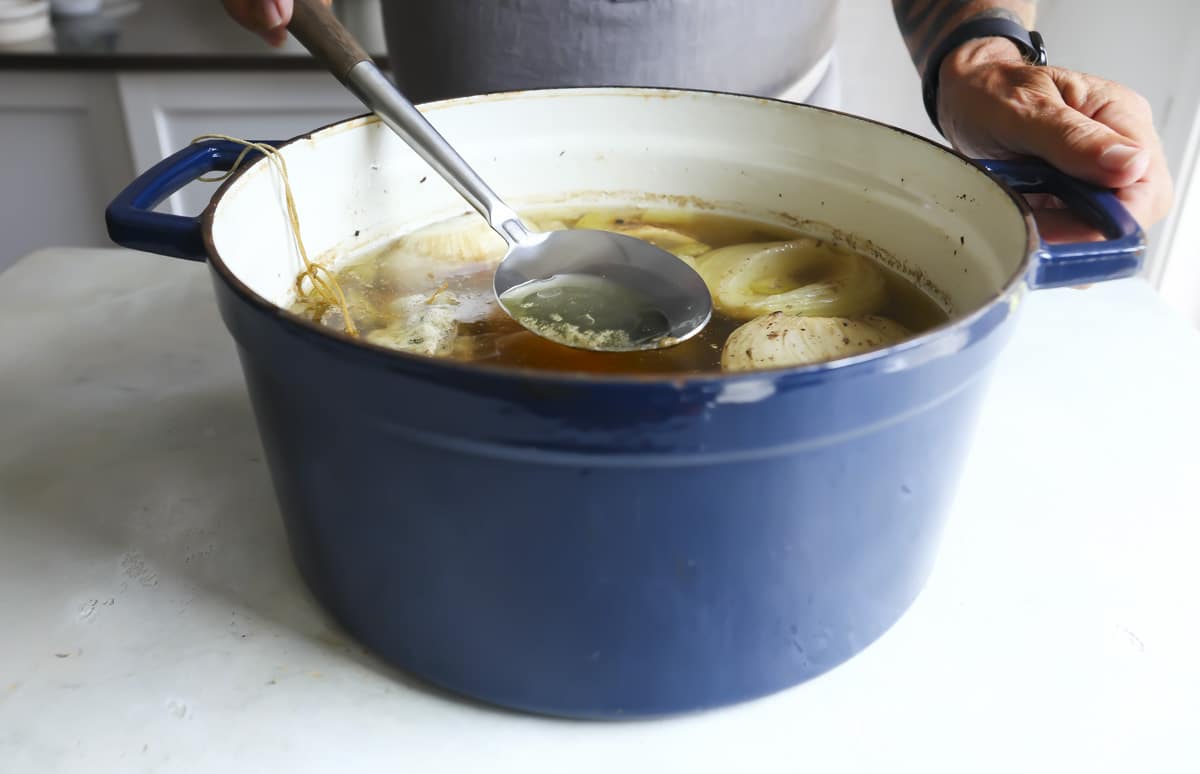
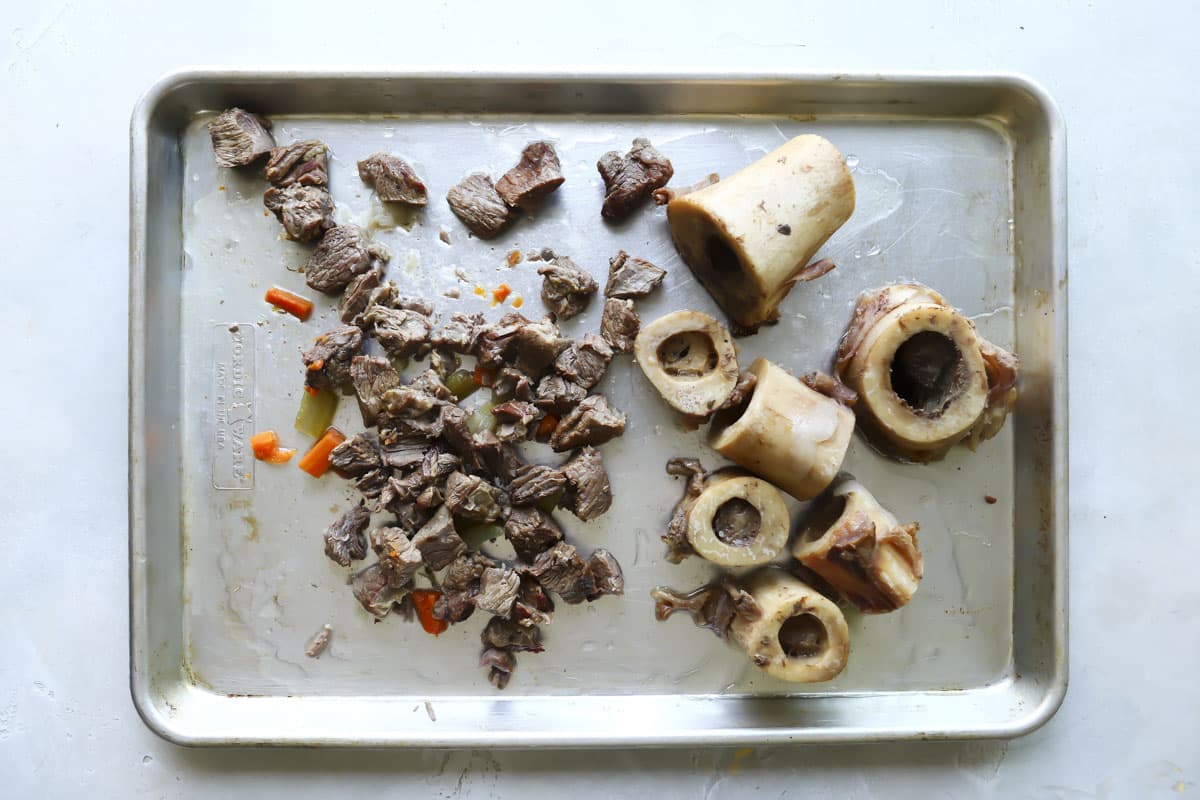
- Remove bones and beef from pot to a rimmed baking sheet or large bowl. Separate the beef and discard bones (you should have at least 2 cups beef you can use for another purpose).
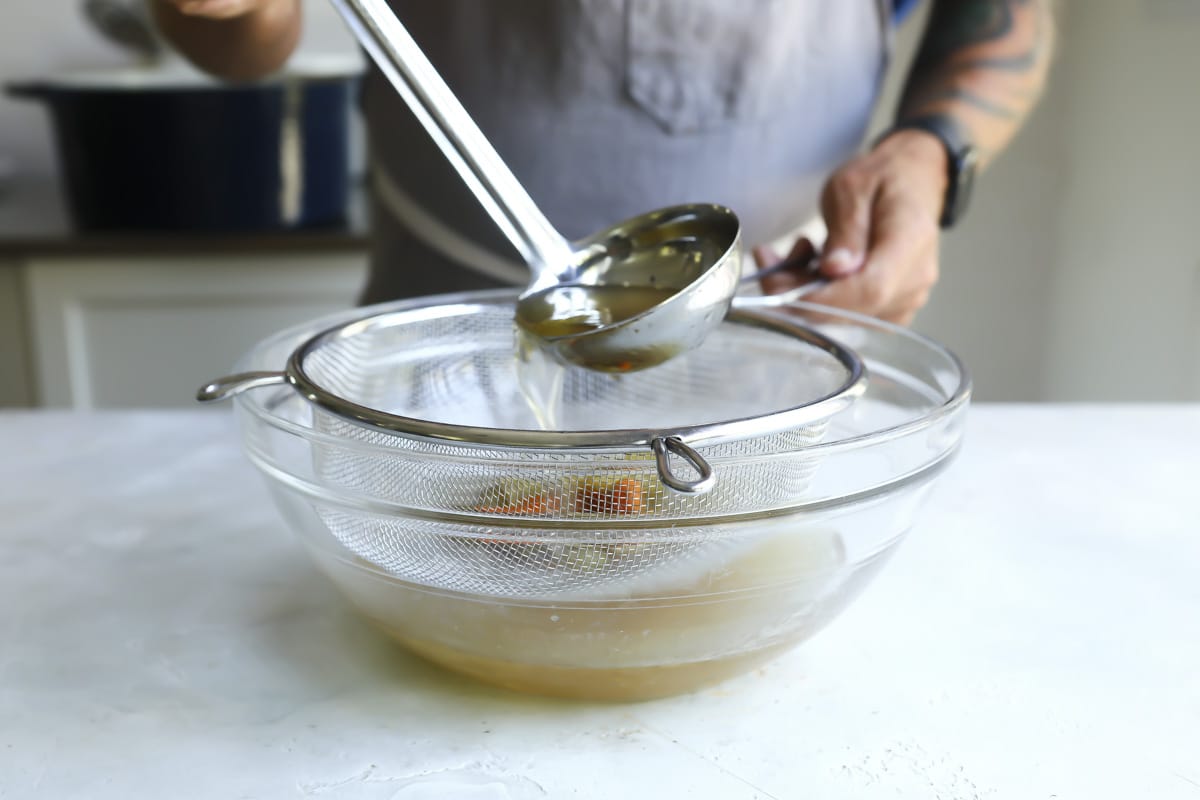
- Strain the broth through a fine-mesh strainer or cheesecloth. Place in a large bowl and chill covered overnight in the refrigerator.
- The next day, scrape off the accumulated fat from the top of the stock and discard or reserve for another use (this is beef tallow, if you’re into that).
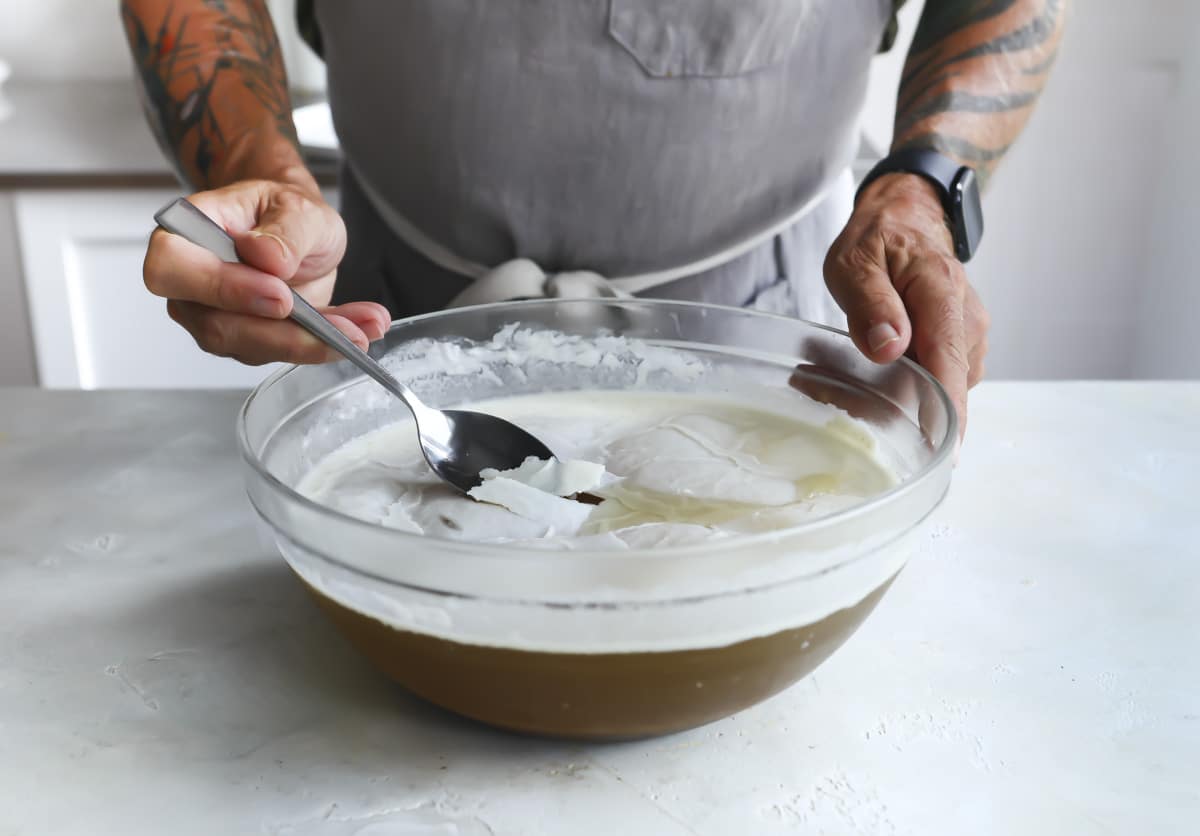
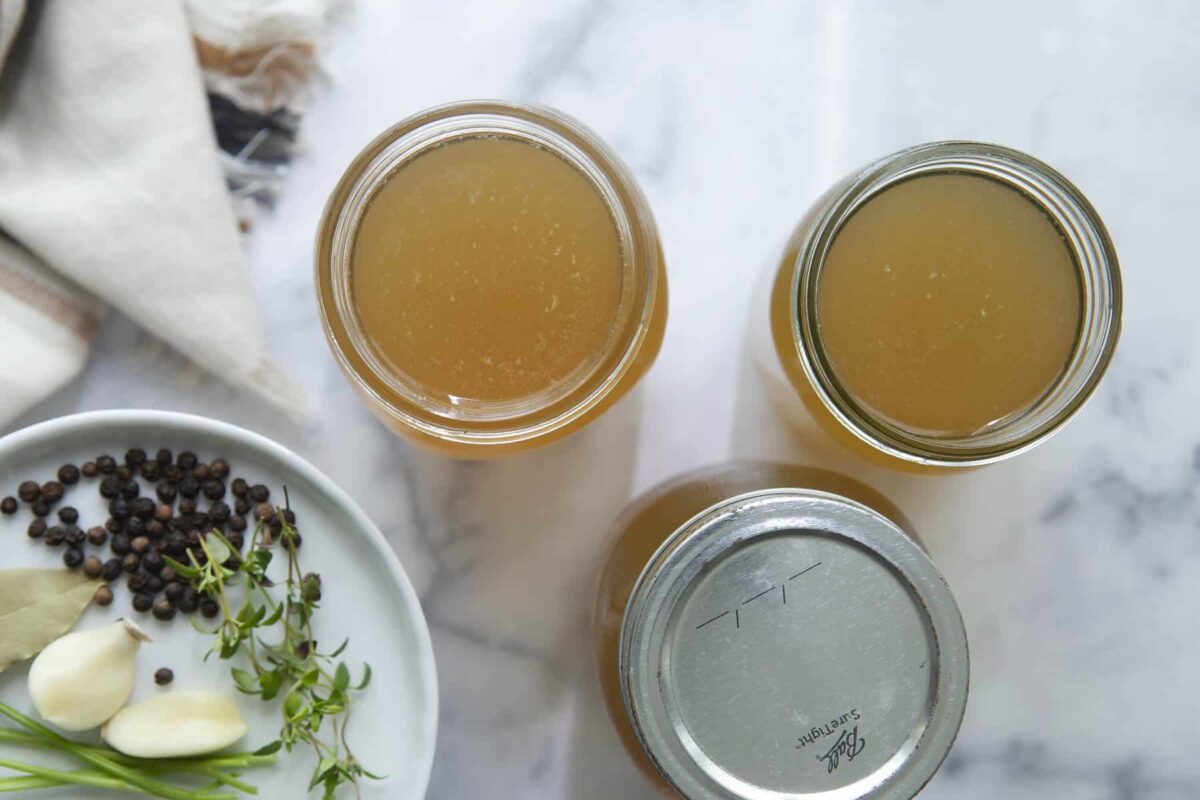
- Divide the broth into freezer-safe containers (leaving at least 1/2-inch for expansion), label, and freeze for up to 3 months. Or, refrigerate and use within 4 days.
Beef Broth Tips and Variations
- Yield: This recipe makes about 8 cups (2 quarts) homemade beef broth. You’ll also get 4 cups cooked beef in the process that you can use for another purpose.
- Beef stock vs. beef broth: Technically, beef stock is made with just bones, while beef broth is made with bones and meat.
- Beef tallow: If you love beef tallow, you’ll be scraping it off after chilling the broth, and it’s tastier than any pure white tallow you might buy at the store.
- Simmer time: Longer simmering yields deeper flavor, but even 2 hours produces excellent broth.
- Extra beefy flavor: Add a spoonful of tomato paste to the roasting pan for extra depth.
- Salt level: Keep seasoning moderate so the broth can be reduced later if needed.
- Pressure cooker: This recipe can be adapted for pressure cooking, though roasting remains essential.
How to Store Beef Broth
- Refrigerator: Store broth covered for up to 4 days.
- Freezer: Freeze in labeled containers for up to 3 months. Leave headspace for expansion.
- Fat layer: Removing fat after chilling improves clarity and keeps flavors clean.
Frequently Asked Questions
Stock is traditionally made with bones only, while broth includes meat. This recipe includes both, resulting in a rich, full-bodied broth.
Roasting creates flavor through caramelization and browning, which is essential for a deep, savory beef broth.
Yes. The beef will be tender and mild, perfect for soups, tacos, pot pies, or hash.
Join Us

How to Make Beef Broth
Ingredients
Sachet d’epices:
- 4 parsley stems chopped
- 1 sprig fresh thyme or ¼ teaspoon dried thyme
- 1 bay leaf
- 1/4 teaspoon whole peppercorns
- 1 clove garlic
Instructions
- Preheat oven to 400 degrees. In the bottom of a roasting pan add bones, beef, onion, carrots, celery, and 1 cup water. Roast until well-browned, about 1 hour, adding water the bottom of the pan if needed some nothing scorches.
- To a Dutch oven or large stock pot, add roasted bones, beef, vegetables, enough cold water to cover (see note 3), and salt. If desired, tie parsley stems, thyme, garlic, bay leaf, and peppercorns to make a sachet or add loosely to the pot (see note 4).
- Over medium-high heat, bring to a boil. Immediately reduce heat to low and skim the foam off the top. Simmer gently (bubbles should barely break the surface at irregular intervals) until the beef is cooked through, at least 2 hours. The longer the broth simmers, the more flavor it will have.
- Remove bones and beef from pot to a rimmed baking sheet or large bowl. Separate the beef and discard bones (you should have at least 2 cups beef you can use for another purpose).
- Strain the broth through a fine-mesh strainer or cheesecloth. Place in a large bowl and chill covered overnight in the refrigerator.
- The next day, scrape off the accumulated fat from the top of the stock and discard or reserve for another use (this is beef tallow, if you're into that). Divide the broth into freezer-safe containers (leaving at least 1/2-inch for expansion), label, and freeze for up to 3 months. Or, refrigerate and use within 4 days.
Notes
- Beef bones: For the richest possible stock, use all beef marrow bones.
- Beef roast: Names can vary, so look for any of these labels: pot roast, blade roast, arm roast, or English roast.
- Cold water: Always start with cold water. This helps keep the broth clear, not cloudy. The amount of water used and the length of simmering time will determine the intensity of the broth.
Nutrition
Related Recipes
Soup Recipes
Beef Stew Recipe
Soup Recipes
Beef Barley Soup
Eats
Beef Bourguignon

Beef Recipes
Beef Stroganoff

Italian Recipes
My family is not big on beef broth. Could you do this with chicken bones?
Hi Daniela, yes! Here’s the recipe on how to make chicken broth: https://cash-surge.live/how-to-make-chicken-broth/%3C/a%3E. Take care! – Meggan